Babysitting the Bots: How Startup Teams Draw Straws for Dashboard Duty

Photo: exhausted programmer staring at computer monitors in dark room at night, via images.stockcake.com
It's 3 a.m. in Columbus, Ohio, and a mid-level backend engineer named Dana is staring at a Grafana panel because an AI agent she didn't build flagged an anomaly that, upon inspection, is absolutely nothing.
This is not her job. Technically, it's not anyone's job. And that's exactly the problem.
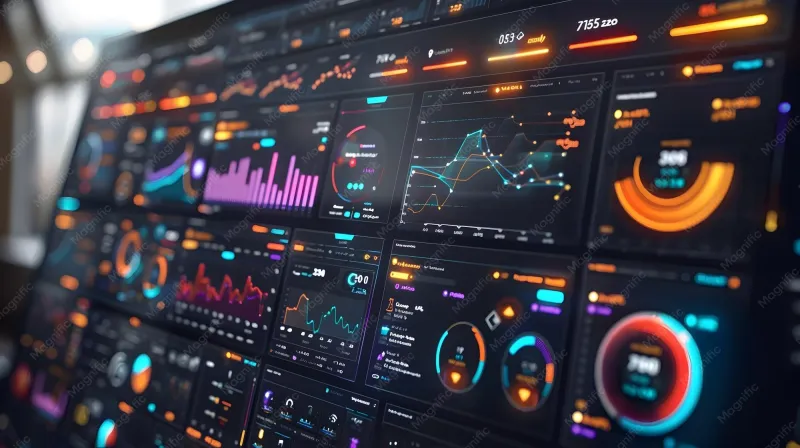
Across small US engineering teams, a new ritual has emerged: the informal dashboard rotation. Nobody hired for it. Nobody budgeted for it. But somewhere between adopting three AI monitoring tools and letting agents run overnight jobs, someone had to draw straws. Welcome to dashboard duty — the babysitting job nobody put in the job description.
How the Rotation Actually Works
Ask five startups how they assign it and you'll get five different answers, but the mechanics are remarkably similar.
One 30-person fintech in Austin keeps a Google Sheet titled "Panels" (the less said about the name, the better). Each week, one engineer gets primary eyes on the AI monitoring stack; a second is backup. The rules live in a Notion doc that's been edited 47 times, mostly by people adding exceptions.
A Denver dev shop runs a Discord bot that assigns "Dashboard Wrangler" roles, complete with a rotating emoji. A Boston healthtech startup, notably more cynical, just checks whose calendar has the fewest meetings. "It's survival of the least busy," their CTO told me, only half-joking.
What's universal is the informality. No comp adjustment. No title change. Just a shared understanding that someone, anyone, needs to notice when the agent handling customer refunds starts refunding everything.
The Politics of Watching the Watchers
Here's where it gets spicy. At startups under 50 people, "whose turn is it" has become genuinely fraught.
The tension makes sense once you look at the incentives. Dashboard duty is invisible work when it goes well — you watched screens and nothing burned down. Congratulations. But it's very visible when it goes poorly. Miss the alert that an AI agent silently maxed out an AWS account, and suddenly you're in a postmortem explaining why you didn't check the panel.
"It's the worst risk-reward ratio in the company," one engineer in Portland put it. "All downside, no glory, and it happens at 3 a.m. your time."
So people game it. Engineers trade shifts like concert tickets. Senior folks develop a mysterious inability to remember their rotation week. And junior devs — who can least afford to push back — end up holding the bag more often than anyone wants to admit. Sound familiar? It's the classic on-call squeeze, except now the thing being babysat is a system that makes its own decisions at machine speed.
Why AI Made It Worse, Not Better
The pitch for AI monitoring tools was always: fewer humans staring at screens. And to be fair, modern tools catch a lot. Anomaly detection, smart alerting, agents that self-heal — genuinely useful stuff.
But here's the catch nobody mentions in the demo: AI-generated alerts need human judgment. When your monitoring stack flags 14 potential incidents a night and 13 are noise, someone still has to look. The tool doesn't know that the traffic spike is just your newsletter going out. The dashboard doesn't know that the agent's "unusual database activity" is a feature, not a fire.
So instead of eliminating the watchman, AI monitoring created a new flavor of watchman — one who spends their shift triaging the judgment calls of a very fast, very confident coworker who never sleeps and occasionally lies.
The Teams Getting It Right
It's not all doom. The healthiest rotations I heard about shared a few traits.
First, they wrote the informal rules down. A one-page doc — who's on, what counts as an escalation, what number to text — beats tribal knowledge every time.
Second, they capped the noise. One team in Raleigh instituted a weekly "alert pruning" session where the on-call person kills a threshold that cried wolf. The rotation comes with a mandate to make the next rotation quieter. Brilliant.
Third, they paid for it — not always in cash, but in something. Extra comp days, a lighter sprint load during rotation week, or at minimum, public credit in the team channel. The teams that treat dashboard duty as real work have real retention. The teams that treat it as a favor are burning people out and calling it culture.
The Bigger Question
The dashboard rotator is a patch, not a solution. It exists because small teams adopted AI operations faster than they adopted AI accountability. Everyone owns the agents; therefore nobody owns the agents.
At some point, watching the dashboards stops being a rotation and becomes a role — or better yet, gets designed away entirely, with tools smart enough to know the difference between a fire and a newsletter. Until then, somewhere in America, an engineer is squinting at a chart at 3 a.m., muttering "this is fine," and hoping the bots behave until morning.
Somebody give Dana a raise.