The Bedside Metrics Club: Engineers Who Watch Their Servers Fall Asleep
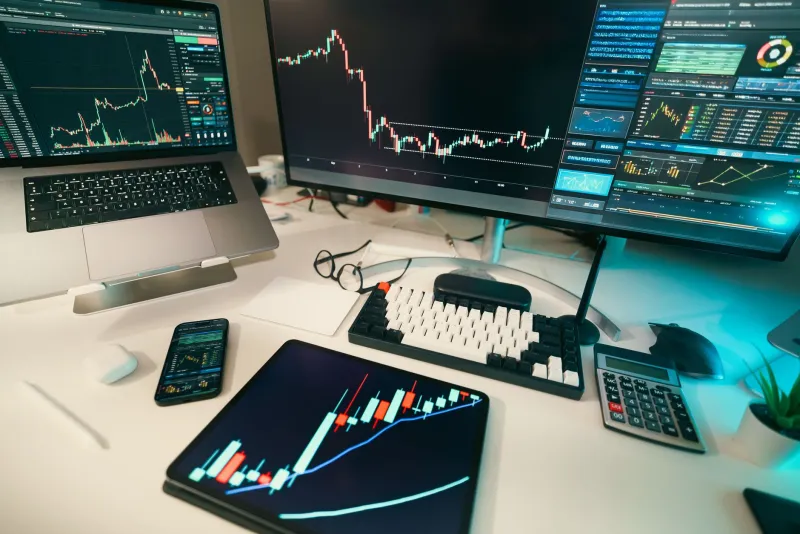
It's 11:47 PM on a Tuesday in a Denver apartment, and Marcus, a 34-year-old platform engineer, is watching a line graph crawl across a monitor mounted above his nightstand. CPU load is flat. Latency is boring. Memory usage looks like a heartbeat. He's not on call. His company doesn't know the dashboard is there. He just likes looking at it.
"It's like a fish tank," he told me. "Except the fish are my Kubernetes clusters."
Marcus isn't unique. Spend enough time in homelab forums, r/selfhosted threads, or the darker corners of Hacker News, and you'll find a quiet subculture of engineers who sleep next to their metrics. Grafana on a repurposed iPad. A Raspberry Pi driving a wall-mounted TV that cycles through uptime charts. Bedside e-ink displays showing nothing but a single green number. The tools vary. The impulse doesn't.
When Monitoring Becomes a Roommate
The obvious question: why would anyone voluntarily put their job — or their hobby — in the same room where they sleep?
The answers tend to split into two camps. The first group frames it as practicality. "If something breaks at 2 AM, I'd rather know," is the common refrain. These are the folks running side projects with real users, small SaaS tools, or family websites that actually generate revenue. A bedside alert isn't neuroticism; it's cheap insurance against waking up to a hundred angry emails.
The second group is more honest about what's going on. For them, the dashboard isn't a tool. It's an ambience. A comfort object. The soft glow of a well-designed panel of charts does for them what a lava lamp did for a previous generation.
"I genuinely find it calming," says Priya, a DevOps engineer in Austin who keeps a wall-mounted display cycling through her home lab's health stats. "Everything's green. Everything's fine. It's the one part of my life where I can actually see, at a glance, that things are okay."
There's something a little poignant in that. In a profession defined by ambiguity — shifting priorities, vague requirements, meetings that could have been Slack messages — a dashboard offers something rare: a system that tells you exactly how it's doing.
The Alert Fatigue Tax
Of course, there's a fine line between a fish tank and a smoke alarm that won't stop chirping.
Almost everyone I spoke to had a story about the moment the hobby curdled. For Marcus, it was a misconfigured disk-space alert that fired every forty minutes for two nights. "I was checking my phone in my sleep," he says. "My wife finally unplugged the monitor. She called it 'the needy computer.'"
This is alert fatigue, and it's not just a bedside problem — it's a multi-billion-dollar workplace problem. Studies of on-call engineers have long shown that noisy alerting trains people to ignore notifications, which means the one alert that matters gets buried under forty that don't. The engineers who sleep next to their dashboards have simply run into this dynamic at a more personal scale.
The survivors have all converged on roughly the same philosophy: ruthlessly prune. One alert per failure mode. Nothing that fires on a schedule rather than a condition. And a hard rule that the bedside display shows state, not events — no pings, no sounds, no red flashing unless something is genuinely on fire.
"The dashboard is for looking at," Priya explains. "The pager is for waking up. If you confuse the two, you will lose your mind."
Aesthetics of Uptime
Then there's the subset for whom the whole thing is, unmistakably, an art project.
Homelab communities are full of people posting photos of their setups like they're showing off a reef tank: custom dark-mode themes, perfectly aligned panels, color palettes matched to the wood grain of the wall mount. There are entire GitHub repos dedicated to dashboard layouts optimized for a ten-foot viewing distance. One engineer I found had built a physical status light — a small lamp that glows green when everything's healthy and amber when it isn't — specifically so he could stop looking at numbers entirely.
Which raises the funniest irony of the genre: the best bedside dashboard, by its own community's standards, is the one you never have to look at. A glance from the pillow, a flash of green, back to sleep. The numbers are there so you don't have to read them.
Vigilance or Anxiety? Yes.
I asked everyone the same closing question: is this healthy?
The answers were refreshingly unguarded. Most acknowledged the contradiction and kept the setup anyway. A few had taken the displays down during burnout and put them back up after recovering, with stricter alerting. One person described removing the dashboard for a month and reporting that he "just felt weird, like the apartment was too quiet."
Maybe that's the real story here. For people whose job is keeping systems alive, a bedside dashboard isn't really about the servers. It's about a relationship to control — the comfort of being able to see, in green and blue and occasionally red, that the machine world is holding together tonight. Tomorrow's standup can wait. Right now, everything's green.